
Alright guys — if you’re here, you’ve probably found yourself Googling terms like “best cream for phimosis”, “foreskin stretching kit”, or “how to stretch your foreskin” with a fair bit of dread… You’re not alone.
I was also in your boat, trying to work out how I was going to do what felt like an impossible job in curing my phimosis myself. Unfortunately for me, there wasn’t as many creams and stretching devices available at the time and I ended up getting myself circumcised.
Whilst I do not regret doing this, one thing I really wish I did before going under the knife was give more time to these methods as, I know now, they do work, and I would have been able to save my foreskin and with it the high level of sensitivity that I have now lost after 10 years of over-exposure.
Dealing with a tight foreskin can be awkward and embarrasing, but there are ways out of this, and even better, there are ways that don’t have to be surgical.

There are loads of creams and gadgets online claiming to “fix” phimosis, but let’s be honest: no cream on its own is going to cure your phimosis. Most of these products only work as part of a bigger routine, and many of them are designed to be used alongside a stretching device anyway.
The reality is simple — consistent, patient stretching is what creates results, and the creams or tools are just there to make the process easier and more comfortable. They can definitely support your progress if you use them properly, but the hard work still comes down to you and your daily routine
Today we’re unpacking what actually works (and what doesn’t), taking a close look at the popular system Novoglan, comparing other creams & kits out there, and helping you decide what direction to take with your own situation.
What Actually Has the Best Evidence: Topical Steroid Creams + Stretching
Here’s the low-down: medically speaking, the most reliable cream for phimosis (i.e. a foreskin that won’t fully retract) is topical corticosteroid creams prescribed by a doctor plus a consistent stretching routine. Yep — it’s not glamorous, but it works.
Studies show that moderate-potent steroids (think: betamethasone, mometasone) applied to the tight bit of the foreskin then gently stretched daily lead to good results in many men. And interestingly, lower-strength options (like hydrocortisone 1%) in some trials have proven nearly as effective in specific cases.

Bottom line: if you want the best cream for phimosis, it’s the one your GP prescribes — not a brand-new “natural” tube from Amazon. The commercial “phimosis creams” out there usually aren’t steroid-based, so they don’t carry the same weight of evidence.
They might help comfort, loosen things a bit, reduce friction or dryness — but they’re rarely the star players when it comes to permanent correction.
I think that if you want to just buy some cream and try to stretch your foreskin manually, then speak with your doctor about prescribing one of the types of creams I mentioned above. Be aware that the doctor may want to refer you to circumcision but I really do advise that you give the stretching some time before surrendering, it really is worth it if you succeed.
That being said, creams nowadays are only really the small cog within a much bigger and efficient system. Let’s take a look at a couple of these systems…
Novoglan
What is Novoglan?
This is the product I feel like I really needed when I had phimosis, this would have allowed me to cure myself and keep my foreskin.
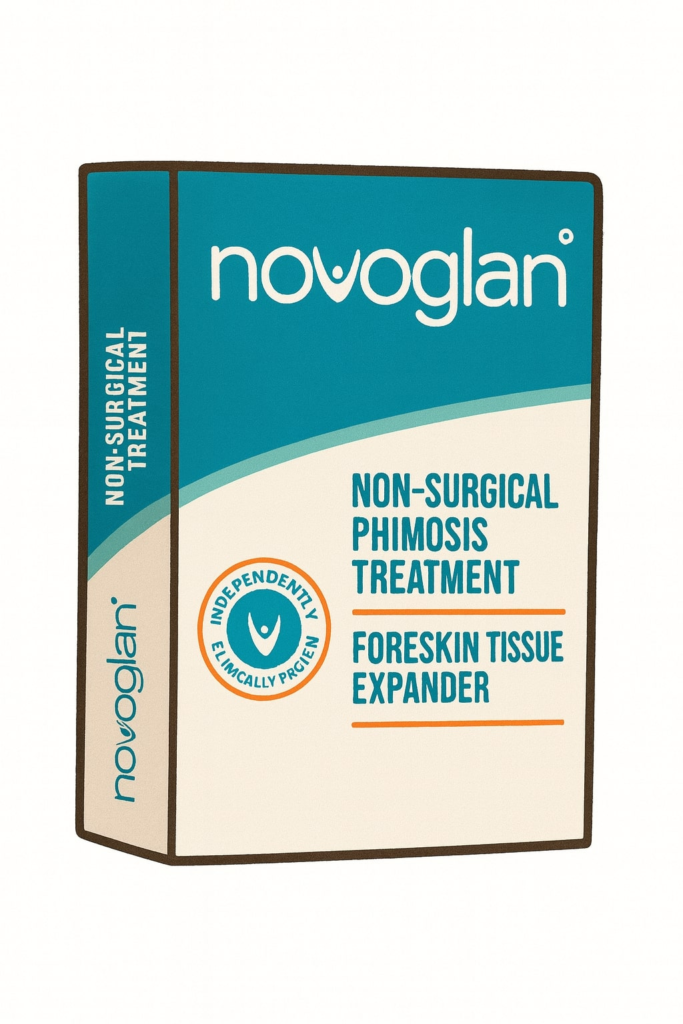
First off: Novoglan isn’t just “a cream”. It’s a system, which includes a balloon-type stretching device that goes under the foreskin plus a conditioning/emollient cream. The promotional bit is “non-surgical phimosis treatment at home” — appealing, right? In effect, the kit targets mechanical stretching and skin conditioning.
The evidence and reported results
The great thing about Novoglan is that there is published clinical data verifying this system. Adult men with phimosis reported high success rates (e.g., improved retractability, many achieved full retraction) after following the kit’s routine. What’s key though: the evidence is about the device + protocol, not the cream in isolation. So the cream helps — but it’s the mechanical overstretching + time that does the heavy lifting.
Pros of Novoglan
- One of the more serious home-non-surgical options with actual data behind it (not just testimonials).
- Good for tighter/pinhole-type phimosis where simple ring-kits might struggle.
- The cream included is formulated specifically for foreskin/glans skin (moisturising, low-friction).
- Clear protocol (e.g., “X minutes per day for Y weeks”) — which should help you stay consistent.
Cons of Novoglan
- It’s more expensive compared to simpler kits or DIY approaches.
- You’ll need to commit to using it properly (device + stretching + cream). If you skip parts, you may not see full benefit.
If you’re serious about avoiding surgery, you want a structured home treatment and can afford the kit — Novoglan is a strong contender. I am currently writing an article which delves deeper into this system, once I have published it I will link it here. You can also read more about it on their website here.
Phimostop
I like this one, another product that’s been clinically tested and is proven to work.
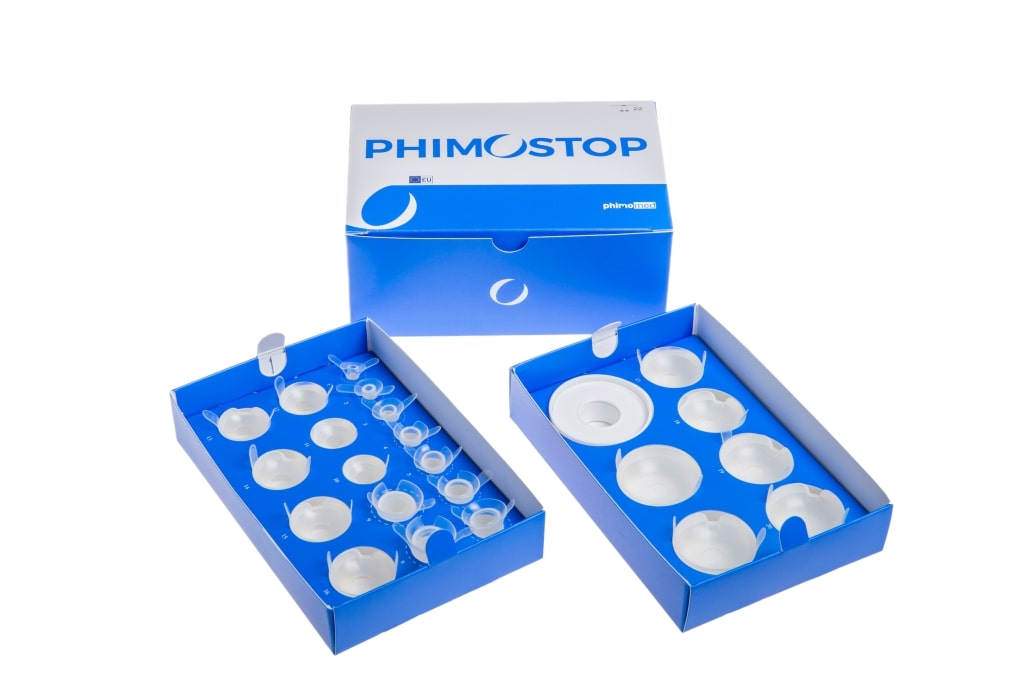
Phimostop is basically a pack of soft silicone dilators (“tuboids”) that come in dozens of sizes. You start small, slip one in under the foreskin, and gradually work your way up size by size.
The goal? Gentle, slow-burn stretching that coax the tight ring into loosening, giving you back retractability the natural way.
What I like about it: there’s no surgery, no heavy drugs, and (if you take it slow) no major pain. You can use it day or night, on your own timetable. It’s a mechanical, no-bullshit kind of solution — and for many guys, that’s exactly what we need.
And yes — it works. One study on adult men with mild-to-moderate phimosis showed that over half of those who followed the protocol avoided circumcision. Others got real results: easier retraction, better hygiene, even more comfortable sex. On top of that, many kept those gains long after finishing treatment.
But here’s the reality check: it’s not magic. It’s slow. It demands patience, consistency and discipline. Some men give up midway — bigger dilators can sting, or logistics get in the way. And if your phimosis is severe, scarred, or caused by something like lichen sclerosus, this might not cut it.
If you’re determined to steer clear of surgery — but willing to do the work — Phimostop sits squarely in the sweet spot. It’s not the easy escape. It’s the slow climb. But for many of us, that’s the climb worth taking.
Pros of Phimostop
- Non-surgical option
- Structured stretching
- Evidence-backed
- Long-term potential
- Can wear it day or night
- Good for mild-to-moderate cases
- Low-risk
Cons of Phimostop
- Requires patience
- Consistency needed
- Can be uncomfortable
- Not ideal for severe/scarred phimosis
- Learning curve
- Drop-outs are common
- Not a guarantee
So who is Phimostop actually good for?
Honestly, it shines for guys with mild to moderate phimosis who want a structured, physical tool to help them stretch safely and progressively. If you’re the kind of person who appreciates having a clear plan, likes measurable progress, and is willing to commit to the routine, Phimostop can genuinely be a game-changer.
But if your foreskin is extremely tight, or you suspect scarring, BXO, or you’ve been dealing with this for years without improvement, you might need something stronger — like a steroid cream from your GP or even a chat with a urologist. No shame in that. And no kit should be used blindly if something feels wrong.
At the end of the day, Phimostop is a helpful tool — not a cure, and definitely not a shortcut. It can absolutely support your recovery, but it won’t replace the dedication and patience required to actually loosen up a tight foreskin. Think of it like gym equipment: buying the dumbbells won’t get you in shape unless you actually pick them up and use them properly.
If you’d like to read more about this product, you can go to there website here.
Other Popular Phimosis Creams and Kits
If you’ve browsed Amazon or eBay for more than five seconds, you’ve definitely seen those mysterious little tubes calling themselves things like “Natural Phimosis Correction Cream” or “Foreskin Elasticity Gel”.
They all look suspiciously similar, often come in teeny tiny bottles, and they all promise the same thing — fast results, painless stretching, and a magically looser foreskin in just a few days. Sounds great, right? Unfortunately… reality isn’t quite that generous.
The truth is, most of these “natural” creams are basically moisturisers with a fancy label slapped on the front. They’re not medical treatments, they’re not backed by clinical studies, and they’re certainly not capable of reversing phimosis on their own.
What they can do, though, is make the stretching process a bit more comfortable. A well-hydrated, well-lubricated foreskin is less likely to crack, sting, or get irritated during gentle stretching — and that’s genuinely helpful. If you’re dealing with dry skin, minor inflammation, or that tight, uncomfortable feeling after exercises, these creams can give a bit of relief.
But here’s the catch (and it’s a big one): you absolutely cannot rely on these creams alone to fix your phimosis. Some listings hype themselves up with lines like “visible improvement in 3 days!” or “cures phimosis fast”, but that’s marketing fluff.
Skin stretching — real, structural stretching — takes time, and no amount of herbal extract is going to shortcut the biology involved. If you’re not doing consistent stretching alongside the cream, the tight ring won’t magically dissolve just because you rubbed something on it.
That doesn’t mean they’re useless. They’re inexpensive, easy to grab, and if you want something to reduce friction and make stretching smoother, they get the job done.
Just think of them as supporting players, not the star of the show. If phimosis recovery were a gym routine, these creams would be the protein shake — nice to have, but you won’t see results unless you actually do the workout.
How to Choose: A Practical Decision Framework
So you’ve got some sense of the options. Here’s how I’d lay it out for you — depending on your situation, budget, comfort level.
- Start with medical advice if you can
- Book a chat with your GP or a urologist.
- Bring up: “I’m having difficulty retracting my foreskin — would a topical steroid + stretching plan make sense?”
- Especially important if you have repeated infections, visible scarring (white patches), pain, or underlying conditions (diabetes, immune issues).
Because: doctor-prescribed steroid + stretching has the strongest evidence.
- If you prefer a structured at-home device route
- Choose something like Novoglan: good for tight/pin-hole foreskin, full kit, structured protocol.
- Choose ring-based kits (Phimocure etc) if your tightness is moderate, you’re comfortable inserting rings, and you want lower cost.
- If you’re on a budget or very cautious about medical treatments
- Use a gentle, fragrance-free moisturising cream (or one of the “natural” phimosis creams) and commit to very slow, consistent manual stretching (gently, don’t force).
- This route may work for mild cases, but expect slower progress and maybe a need to move to stronger treatment if progress stalls.
- When none of this is appropriate (or fails)
- If you’ve tried conservative approaches (cream + stretching) for several weeks/months, still can’t retract, or have scarring/infection → surgery may be the safer, more definitive route (preputioplasty or circumcision).
Reality check:
If ANY treatment (kit, ring, cream) is causing tearing, severe pain, bleeding, stop immediately and get medical advice. This area is sensitive; we don’t want extra damage.

Safety, Red Flags & Final Reassurance
Okay — final bits of honesty, guys. Here are the red flags and the reassurance you need.
Red flags – see a doctor sooner rather than later if you:
- Have a foreskin that’s stuck behind the glans and won’t move forward (that’s paraphimosis – emergency).
- See white, scar-like patches or rings on the foreskin/glans (could be lichen sclerosus / BXO).
- Have repeated infections, cracks, bleeding, painful erections or difficulty peeing.
- Live with diabetes or an immune condition and notice foreskin issues.
Reassurance:
- You’re not weird for dealing with this. Urologists see phimosis a lot.
- Do-it-at-home methods often work, and many men avoid surgery entirely.
- If surgery is needed — it’s often quicker and less dramatic than you might imagine. Many men feel huge relief afterwards.
Final word: The Best Cream For Phimosis
I have given you a lot of information here to help you make an informed decision, in this article I really wanted to make you guys realise that a cream alone isn’t going to work, and hopefully I have done that.
Don’t feel like you must rely on every “miracle” cream you see in ads. Focus on what’s proven, be consistent, and be patient. Stretch gently, use a good cream for comfort, consider a proper kit if you want structure, and crucially — talk to a doctor if you’re unsure or progress stalls. A freer, more comfortable foreskin is absolutely possible.